
Introduction
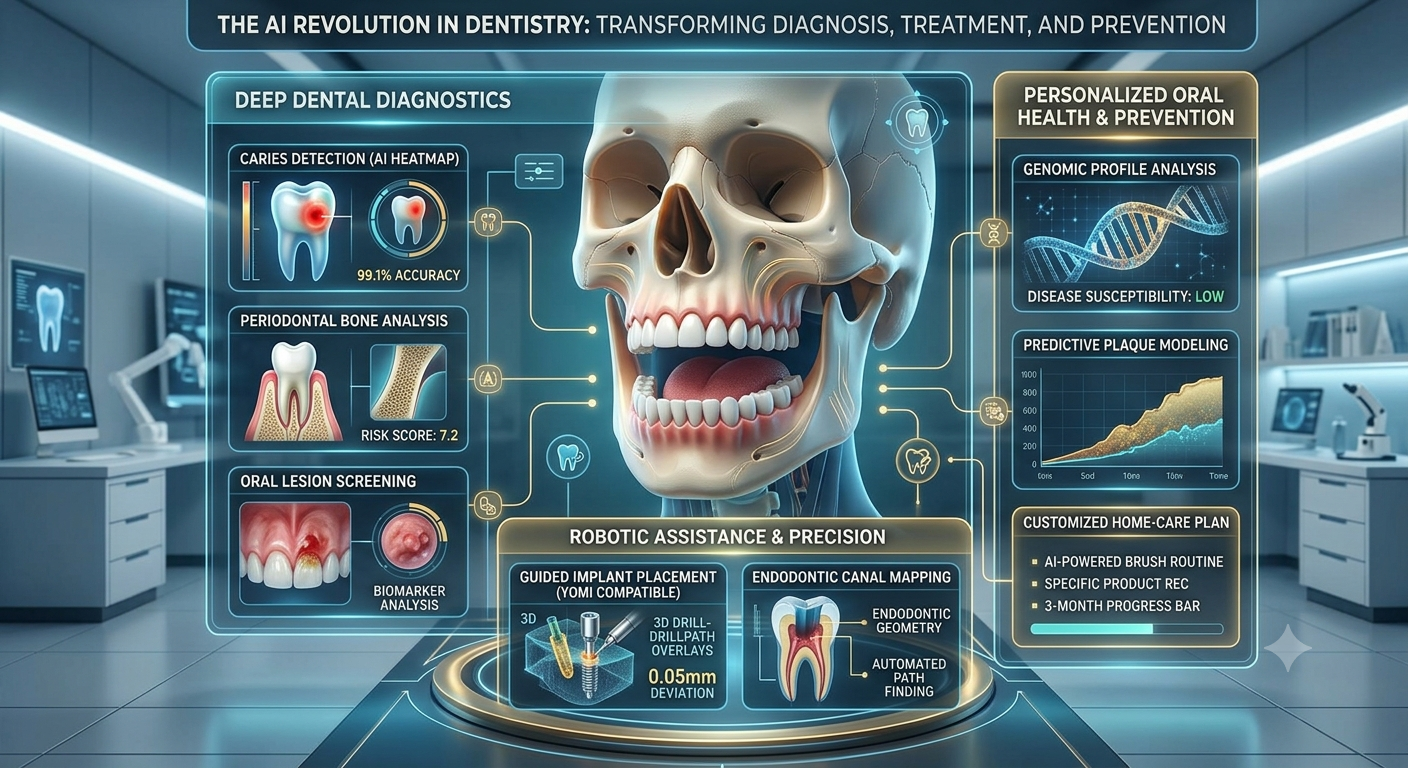
Artificial intelligence (AI) is revolutionizing nearly every industry, and dentistry is no exception. The concept of an AI dentist is no longer science fiction—it is becoming a practical reality that is improving patient care, increasing diagnostic accuracy, and helping dental professionals provide more personalized treatment. From detecting cavities in their earliest stages to planning orthodontic treatments and managing patient records, AI-powered dental technologies are reshaping how oral healthcare is delivered.
As dental practices continue to adopt digital solutions, AI is becoming an essential tool rather than a luxury. It supports dentists by analyzing large amounts of clinical data within seconds, reducing human error, and improving decision-making. While AI cannot replace the expertise and compassion of a qualified dentist, it significantly enhances the quality and efficiency of dental services.
This article explores how AI is changing modern dentistry, its key benefits, applications, challenges, and what patients can expect in the future.
What Is an AI Dentist?
An AI dentist refers to the use of artificial intelligence technologies in dental diagnosis, treatment planning, patient management, and clinical decision-making. Instead of replacing dentists, AI acts as an intelligent assistant that helps identify oral health problems more accurately and efficiently.
AI systems use machine learning algorithms trained on thousands of dental images, X-rays, and patient records. These systems learn to recognize patterns associated with cavities, gum disease, bone loss, impacted teeth, oral cancer, and other dental conditions. The technology continuously improves as it processes more data, making it increasingly reliable over time.
Modern dental clinics are integrating AI software with digital imaging systems, allowing dentists to receive instant insights during patient examinations.
How AI Works in Dentistry
Artificial intelligence relies on advanced technologies such as machine learning, deep learning, and computer vision.
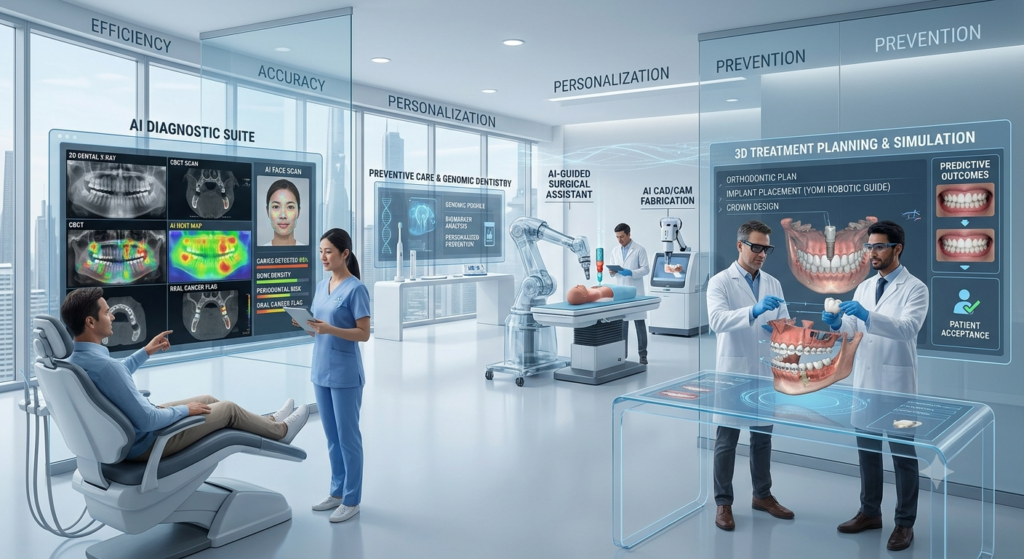
Image Analysis
AI examines digital X-rays, CBCT scans, and intraoral photographs to detect abnormalities that may be difficult for the human eye to notice.
Pattern Recognition
The software compares patient data with thousands of previous cases, identifying similarities that help dentists make informed clinical decisions.
Predictive Analytics
AI predicts potential oral health risks by analyzing patient history, lifestyle factors, and clinical findings. This allows dentists to recommend preventive treatments before serious problems develop.
Continuous Learning
Unlike traditional software, AI systems improve their accuracy as they analyze more patient cases and receive expert feedback.
Benefits of AI Dentist Technology
Improved Diagnostic Accuracy
One of AI’s biggest advantages is its ability to detect dental diseases earlier than traditional methods. Tiny cavities, early-stage gum disease, and subtle bone loss can be identified before symptoms become severe.
Faster Treatment Planning
AI rapidly analyzes diagnostic data and suggests treatment options, allowing dentists to spend more time discussing care with patients instead of manually reviewing images.
Better Patient Education
Many AI systems generate visual reports highlighting affected areas on dental X-rays. Patients can clearly understand their oral health conditions, increasing trust and treatment acceptance.
Reduced Human Error
Fatigue and workload can occasionally affect clinical evaluations. AI provides a second opinion, reducing the chance of missed diagnoses.
Personalized Dental Care
Every patient’s dental condition is unique. AI uses individual health records to recommend customized treatment plans that match specific needs and risk factors.
Common Applications of AI in Dentistry
Artificial intelligence is being used across multiple areas of modern dental practice.
Cavity Detection
AI identifies early tooth decay that may not be immediately visible during routine examinations.
Orthodontic Treatment
AI helps orthodontists create more precise treatment plans for braces and clear aligners by analyzing tooth movement and facial structures.
Dental Implants
AI assists in implant planning by evaluating bone density, nerve locations, and ideal implant positioning for greater success rates.
Gum Disease Assessment
Advanced AI software measures bone loss and gum recession from dental X-rays, helping dentists diagnose periodontal disease earlier.
Oral Cancer Screening
Artificial intelligence can detect suspicious lesions and tissue abnormalities that may require further investigation, supporting early diagnosis.
Administrative Automation
Beyond clinical care, AI also schedules appointments, manages patient records, sends reminders, processes insurance claims, and improves practice efficiency.
AI Dentist vs Traditional Dentistry
Traditional dentistry relies heavily on the dentist’s education, experience, and manual interpretation of clinical findings. While experienced professionals provide excellent care, AI offers additional analytical support.
AI can review hundreds of images within minutes, identify subtle abnormalities, and generate consistent evaluations. However, it lacks emotional intelligence, communication skills, and clinical judgment that only licensed dentists possess.
The ideal approach combines human expertise with artificial intelligence, creating a partnership that delivers more accurate diagnoses and improved patient outcomes.
Challenges of AI in Dentistry
Despite its advantages, AI adoption comes with certain challenges.
Data Privacy
Dental clinics must ensure patient information remains secure and complies with privacy regulations.
High Initial Costs
Purchasing AI software, digital scanners, and imaging equipment requires significant investment, especially for smaller practices.
Staff Training
Dental professionals need proper training to effectively use AI-powered systems and interpret their recommendations.
Ethical Considerations
AI should support—not replace—the professional judgment of licensed dentists. Final treatment decisions must always remain under human supervision.
The Future of AI Dentist Technology
The future of AI in dentistry looks exceptionally promising. Researchers continue developing systems capable of detecting diseases with even greater accuracy while integrating robotics, 3D printing, and predictive analytics.
Future AI-powered dental clinics may include:
Robotic Assistance
Robotic systems could assist dentists during precise procedures while maintaining high safety standards.
Virtual Dental Consultations
Patients may receive AI-assisted remote assessments before visiting the clinic, saving time and improving accessibility.
Smart Preventive Care
Wearable devices and smart toothbrushes connected with AI could monitor oral hygiene habits and provide personalized recommendations.
Fully Digital Treatment Planning
From diagnosis to restoration design, AI may automate much of the planning process while dentists supervise treatment quality.
How Patients Benefit from AI Dentistry
Patients are the biggest beneficiaries of AI advancements.
Some major benefits include:
- Earlier disease detection
- More accurate diagnoses
- Faster appointments
- Better communication through visual reports
- Personalized treatment recommendations
- Reduced unnecessary procedures
- Increased confidence in treatment decisions
These improvements contribute to healthier smiles and better long-term oral health outcomes.
Should You Trust an AI Dentist?
Patients sometimes worry that artificial intelligence will replace their dentist. In reality, AI is designed to assist dental professionals, not replace them.
Licensed dentists remain responsible for examining patients, confirming diagnoses, discussing treatment options, and performing procedures. AI simply provides additional clinical information that helps improve decision-making.
When combined with experienced dental professionals, AI creates a safer, more efficient, and more accurate dental care experience.
Conclusion
Artificial intelligence is transforming modern dentistry by improving diagnostics, enhancing treatment planning, and creating more personalized patient experiences. The rise of the AI dentist represents one of the most significant technological advancements in oral healthcare.
Although AI cannot replace the expertise, compassion, and judgment of trained dental professionals, it serves as a powerful partner that helps dentists deliver higher-quality care. As technology continues to evolve, patients can expect faster diagnoses, more accurate treatments, and better overall dental experiences.
The concept of an AI dentist is no longer science fiction—it is becoming a practical reality that is improving patient care, increasing diagnostic accuracy, and helping dental professionals provide more personalized treatment